Tuesday, 24 June 2014

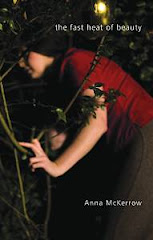
Regressive Poetics is finally OUT!!


A work that is complete in its enveloping of the infinite intelligence of the incomplete refracted through the mind of one powerfully alone in her own engagements, Mckerrrow's divination is exploration of the explanation of divination written through the digital seascape of the beautiful language warp. She is a longing voice echoing through walls, a collected driven, a concerned concentration of poetry upon spiritualisms. It is a unique and beautiful document you hold in your hands, a report from an other side.

 – S.J. Fowler

'Why are you 51447435432 120142343?' ask the spirits via McKerrow via her digital dictation app. Think you can answer that? There are less straightforward questions hiding in the interference on the line - or is it interference? Who is speaking? Which are the discrepancies and where is the message? Was that funny ha-ha or deadly funny? Do not dismiss or pass over. Listen.

– Ryan Ormonde

Regressive Poetics, my fourth book of poetry, is now available. The above review/blurbs were kindly provided by two of the poets I am coincidentally (!) interviewing for my upcoming series on Experimental Poetics for Resonance FM, beginning Monday 1st July at 9pm with the fabulous, was-almost-the-next-Orlando Bloom Ryan Ormonde and continuing with me, Sarah James, Richard Barrett, S J Fowler and David Berridge. A full schedule will follow shortly. The show will focus on recent work by all of us for the awesome Knives, Forks and Spoons Press, which is the most prolific experimental press in the UK.

If you're curious to know what a process-based experiment in linguistics/poetics, using past life memory as a concept and digital dictation as a functional metaphor looks like, look no further! Here's the explanatory blurb at the beginning of the book. I like to provide explanatory context for the more avant-garde work because, lets face it, who would understand it otherwise?

Regressive Poetics

I became aware of the concept of reincarnation at a young age, being presented with the idea that our souls use the earth as a vast schoolroom, returning to it to learn new lessons over many lives, as a completely logical concept by my mother. I continue to view it as entirely likely.
When I was older I discovered that my grandmother had for many years been secretary and editor to A J Stewart, author of Falcon: The Autobiography of His Grace James IV, King of Scots. Ms Stewart’s fascinating book was the account of her past life as James IV, and she was completely convinced of the veracity of her story.

The guiding ethos of this work is my interest in the correlations between artistic and
spiritual practices, and the strong place of language within practices such as meditation, magic, divination etc. After producing a process-based poetic work on the tarot I wondered whether past life recall stories would be an interesting medium for a similar processual approach.

I am interested in the way that a past life “memory”, or story, is accessed via a hypnotic state, and relayed to the hypnotist or therapist in a state very much like a waking dream. We have all had the experience of language in dreams, where the words that seem so profound in the dream are nonsense when awake.

There is also an element of translation or decryption present in past life tales, in the sense that they are usually relayed back in a somewhat fragmentary way from the border of the unconscious. In mediumship this is a common problem, because communicating with the spirit world is described as talking with someone very far away, or operating on a very different frequency of sound. Discrepancies occur.

I see now how we can wander and get lost in the memories of the automatist when we so-called dead try to communicate. This kind of mutual selection is bound to be what my friend Gerald calls a “mixed grill”

– Received from Winifred Coombe Tennant by Geraldine Cummins in Swan on a Black Sea: A Study in Automatic Writing eds Signe Toksvig, 1971.

I wanted to push this derangement of language another step further, this “mixed grill” of language from one side, death, being translated through to the other side, life.

 
I worked with a digital dictation app into which I read published accounts of past lives from a variety of sources. This produced its own version of the text, complete with interesting inaccuracies and juxtapositions and a surprising amount of digital and online-speak, which can only reflect the programming of the app to be sensitive to current technological jargon. In the way that the app “made sense” of what I gave it, we too tend to interpret accounts such as past life “memories” through the veils of historical fact, bias, scientific rationale, physics theory or personal prejudice.

 
With past life regression hypnotic work there is also the possible issue of suggestion on the part of the hypnotist/therapist, again echoing the possible adjustment of the text. This mediation is also common in mediumship, as mentioned above. In Swan on a Black Sea, the spirit of the very politically liberal Mrs Coombe-Tennant sometimes transmitted” far more conservative political opinions, which was deemed to be the bias of the medium Miss Cummins’ own beliefs on the original message.

Each poem in this collection is based on one particular past life story and is the result
of translation and rewriting from the original text (the original experience) to a doubly mediated text – a version of the original mediated first by technology and second by the writer (me). Some pieces were recorded by the app direct from online videos rather than being read aloud by me. The poems are therefore subject to technological, programmed language bias and personal bias/artistic style on my part.

This is an integral part of their being.

I found that this method gave me some linguistically interesting pieces which still managed to keep a sense of dreamlike mystery as well as highlighting the strange hyperreality of “remembering” a past life in such apparent detail. In these poems, the stories are trying to “get through”, but there is an imperfect medium (me) using a flawed machinery.

Sunday, 22 June 2014

Where I ruminate on my favourite short story collections

I was looking at the bookshelf in the utility room today  – because books are everywhere in this house – and I started thinking about all the great short story collections I’ve enjoyed over the years. A few caught my eye: creased spines from spending a week splayed on armrests; creased covers from being lost in dusty handbags; folded down pages. I trash my books. With love. I like the things I love to have that lived-in look. That’s a backward compliment to all the men I’ve ever found attractive.

Anyway, I made a quick top ten – as I am wont to do. I like a good top ten. And then I thought I’d write down the top ten. On the back of an envelope, as it was handy, and I had a spare minute because I’d gone to the loo and the window of leaving mummy alone because she’s in the bathroom was still open.

Then, I remembered I had an underused blog, and I really should be using it more. So here’s my top ten (in no particular order: I like lists but rankings are beyond me) of great short story collections that may or may not have influenced my writing over the years. N.B – I mean in style. I have only ever written one short story, as a favour to a friend. Kind of a strange favour without context. And then I wrote this out, and I lost the will to live at eight. But eight is a lucky number for me, so I’ll leave it there.

Corpus – Susan Irvine
My fellow Quercus author (yeah, got a mention of my book deal in!!! whoop whoop) Susan Irvine is, in my opinion, one of our greatest living British authors. I have this collection and her novel Muse, which is also excellent, but it’s the short stories in this book that really stand out as something beyond the norm to me. Corpus is a series of stories that all meditate in some way on the nature of the making of art and the visual art world, whether it’s about a writer toiling away at her novel about perfumes or an artist raising a nongendered child as a contemporary art experiment. In “Chaplet of the Infernal Gods”, a story about a writer becoming a writer via Julia Cameron’s seminal art-practice-as-spiritual-work The Artist’s Way, there is possibly the dirtiest line I have ever read in a work of LITERATURE – about Napoleon writing home to Josephine, telling her not to wash until he came home. He was, apparently, a fan of the natural smell of the human (female) body. Irvine’s writer-narrator says

“he wanted Josephine ripe and runny as an old Camembert (…) you get a highly-sexed, olfactively-arousable skanky Napoleon who wants to dash home at the head of his victorious army and find Josephine emitting waves of vaginal effluvia from under her muslin court dress.”

And this letter to Josephine – “Home in three days. Don’t wash,” was the inspiration for the perfume Je Reviens. I return. Food for thought.

I like to give this story to creative writing students to read and discuss – on one hand because it is about the process of writing, of beginning to write – but also because of the vaginal effluvia. Separates the group somewhat. Amuses me.

A Good Man is Hard to Find – Flannery O’Connor
One of the masters of the short story form, Flannery O’Connor was one of the many great American writers that attended the Iowa Writers Workshop in the 1940s. She remains one of the best American short story writers, and my favourite story in this collection is “A Stroke of Good Fortune” mostly because the events typify what a short story is supposed to do. It covers a small space of time – the time it takes for a woman to climb a few flights of stairs. At the top of the stairs (the top of the story; the climax/realisation/epiphany) she realises she is pregnant. She comes back down the stairs and the tone changes a little from a sense of doomed expectation to a more ambiguous possibility that there may have been some good fortune. But only that there may. The writing is sparse but full of feeling; the imagery is physical and the stories – all of them in the book – have a kind of violent realisation in each one. O’Connor said that she was sick of people reviewing the book and talking about the horrors that lie within it, because in her mind they were everyday horrors. The everyday difficulties and spectres in most people’s lives.

First Love, Last Rites – Ian McEwan
I am not a huge McEwan fan, but this first publication is raw and beautiful and horrifying. Menace and threat permeate the pages in the inbetween places of the English landscape – canals, underpasses, rivers. I get disquieted every time I read it, but that just means it’s doing its job. If a book continually puts you on edge despite you knowing what’s going to happen, that’s something special. The stories are incredibly dense and full of sadness and weight at the same time, and all of the horror is horrifying and sad because it happens every day to ordinary people in exactly the kind of accidental and casual, unreported and unregulated way that McEwan depicts. Depressing. But that has never been a reason I put a book down. Depressing is at least honest and real. I tire easily of relentless optimism.

Pretty Monsters – Kelly Link
Canongate published this volume of the American writer’s ghoulish teen-esque/crossover short stories a few years ago with a cool cover (Shaun Tan illustrated) and I wanted it on sight. Imagine my joy when I discovered inside a writer that Neil Gaiman describes as a national treasure and Audrey Niffenegger lauds as “the literary descendant of Jorge Luis Borges and Franz Kafka”. I’m not too sure about that, as these are, after all, tales about monsters eating people at a campout in a kind of self-conscious humourous postmodern bloodlust and dead ex-girlfriends that you buried with your bad love poetry, and then dig up because you want the poetry back – only to find that the girlfriend is walking around with unmanageable hair, making derisory remarks about your literary skills.
But I can see where Audrey’s coming from, if she is a little grandiose – Kelly Link isn’t of the avant-garde. Neither has she created a whole new genre of fiction or written something so densely philosophical that it turns the whole notion of what reading is, what reality and knowledge is, on its head. But she does write about monsters and transformation, and she convenes a gothic horror sensibility with a post-something sense of humour and a quirkiness in a minimalistic, IKEA showroom, and dazzles you with a balance between literariness and the fantastical which is really, really, really good. Love Kelly. Because fantasy and gothic horror and genuinely good writing are NOT necessarily separate.

Grace, Tamar and Laszlo the Beautiful – Deborah Kay Davies
This is the kind of conceptual short story collection I love – where each story is its own microcosm, but they all contribute to an overall macrocosm of story. All of the stories in this book depict different moments in the lives of Grace and Tamar in the title. And what I really love about it, again, I guess, is the extreme physicality of the writing. Like, the way that Davies emphasises the reality of life – the body. Blood. Milk leaking from breasts. Lust. Snotty noses. That life is messy and people are primal, obeying their primal urges, and life is full of edges and sharpness. Tamar, in particular, is quite horrible in some of the stories. One of those heavy, aggressive kids, sticky, thrusting, selfish. And there’s a terrific reality to her and all the characters. The study of the (one presumes) badly post-partum depressed mother whose best dress hardly buttons over her somehow obscenely enlarged breasts, and who is convinced that the people are coming through the radio to get the baby. And as ever with a child narrator, the eyes don’t judge – we do. Really loved this book.

The Secrets of Dr Taverner – Dion Fortune
Dion Fortune, the pen name of Violet Firth, a Christian occultist and spiritual pioneer, was an author of many books of mystical fiction as well as nonfiction volumes about the Qabalah and working within the hermetic tradition. The first of these I read, in my teens, The Sea Priestess, made a huge impact on me and was one of the key texts that developed my interest in paganism. However, The Secrets of Dr Taverner is a collection of short stories I read much later on. The stories are a kind of “casebook” of a fictional modern (read 1940s/1950s) magician/occultist and his assistant, solving paranormal issues in people’s lives with magic. Kind of like Medium/Charmed meets Sherlock Holmes, and just as British as Conan Doyle, with the added bonus that all the stories were based on Fortune’s real life experiences. These things really happened.

And that, in many ways, influenced my own writing. All of Fortune’s fictional works are cracking good reads in the style of Ian Fleming meets Somerset Maugham; clipped and British and decidedly upper class, but with sensational content. I wanted to write something similar – that had a base in the reality of modern magical practice, but avoided being textbookish and was a really enjoyable read. Whether I achieved this with the Greenworld trilogy will be judged by history. In the same way that Tolkien considered LOTR history rather than fantasy, because it, to him, was a fictionalised version of his many years of research of Scandinavian and European mythology, The Secrets of Dr Taverner is not fiction or paranormal entertainment. It is real.

Dancing Girls – Margaret Atwood
I am a huge Atwood fan and so a collection of hers needed to be here, but in fact it was hard to choose which one. I landed on Dancing Girls instead of, say, Bluebeard’s Egg, because it contains the story “The Resplendent Quetzal”, a fabulous story, typically Atwoodian, that dissects the weaknesses of man-woman relationships – especially old relationships with old scars and fractures. In it, an apparently ordinary holiday is enjoyed by a man and a woman that don’t really like each other anymore, and ends up on a life raft, where the woman only starts to feel alive once her life, and his life, is threatened. It’s a tough choice between Quetzal and the story “LouLou, Or, The Domestic Life of the Language” in Bluebeard. Loulou is the story of a successful woman potter who finds she is financially supporting all the slack intellectuals and poets that form her ex-husbands and lovers; in return, they patronise her. You’re so Chthonic, LouLou, they say, and laugh at her face when she doesn’t understand the word. Finally she starts seeing an accountant and gains closure.

One of the many things to love about Atwood is her sense of humour; no situation is dire enough not to have a wry smile included somewhere. Even though humans are strange and terrible and great and wonderful, they are also usually a bit ridiculous. And I have also, in all her work, so greatly enjoyed her characters, specifically because she writes original, intelligent female characters that live real and large, and that love language. I somewhat feel that the title, LouLou, Or The Domestic Life of the Language is a reference to Atwood’s own meditations with language, and the practice of many of her characters of playing with it. Tony in The Robber Bride loves backward words. There is much joyful invention of words and punnery in the Oryx and Crake series.  And LouLou lives among male language, the elaborate mummery of over-intellectualism, being the only really real, well-drawn character; real, of the earth, her hands in clay. Atwood is one of the cleverest people on the planet, but she’s too classy to disappear up her own backside with needless pretension. Her abstraction and style is deep and sonorous, intellectual and real. Excuse me while I disappear in a cloud of worship. Ahhhhh.
The Bloody Chamber - Angela Carter
I have a strange relationship with Carter. We haven’t spoken for years. Not since she died. Haha. Bad taste. No, I mean, I love her writing, but I only love it intellectually. There’s something about her characters that are not lovable. But that’s okay. The Bloody Chamber is so amazing that it doesn’t matter. This is a classic of the rewritten/reimagined fairy tale/myth/legend genre, and Carter interrogates the natural gore and sexual undercurrents of the original tales, as well as bringing bodily reality into the stories. I wrote, in my BA dissertation, all those years ago in 1999, “Carter writes the body on the page; corporeality pervades The Bloody Chamber”  - yeah, pretentious – but TRUE. It’s all sweat and piss and blood again. This is a bit of a theme in this list. More importantly, all the stories explore the role of the woman in traditional tales, and frequently re-present female characters in positions of power rather than weakness.
And – factoid - Punk band Daisy Chainsaw adapted the story of "The Lady of the House of Love" for their 1992 music video for "Hope Your Dreams Come True" (from the EP of the same name and also later the album Eleventeen). There you go.


Friday, 25 April 2014

Post punk teenism

Over the past couple of weeks I have been writing to my friend and fellow poet Ryan Ormonde as my 17 year old self, from 1994. He has been responding as his 17 year old self from 1999. We are using the amazing new technology called electronic mail which I have hitherto only encountered as a thing in the future in my Business Studies GCSE.

Having discussed it with with Ryan last night, as we recorded the first two episodes of a series on experimental poetics for Resonance FM, we are both loving the opportunity to write autobiographically but still "in character" as ourselves, but a past-self. And most of all we are both finding it cathartic, and surprising. It's enlightening to know that we were actually pretty cool in our own different ways, that we weren't as sad and pathetic as we thought we were, and we should have given ourselves a bit more of a break.

Music was always incredibly important to me since about 12, and by 17 I was thoroughly immersed in 80s-90s rock and heavy metal, as well as having a good grounding of prog rock from my dad's music collection. But it took until I was 16-17 for my first boyfriend to introduce me to punk. In 1993 he took me to see Henry Rollins in one of his spoken word concerts, though I had no idea who he was, this intense, tattooed man in paradoxically sensible shoes. I do remember, vividly, walking straight past him on the way in, and then feeling like he was talking to me when he launched into a story about how really waster guys get great girls. I really thought he was talking about me and my boyfriend because he saw us on the way in. Was there ever a better example of how it's all about you in your teens?

So, I became a Rollins fan, and soon after heard the Dead Kennedys and The Damned and fell in love. From there it was just a short spit, jump and a pogo over to Jello Biafra's solo career, and his album with Canadian rockers DOA is still in my top five.


You've gotta love Jello, and if his politics sounded paranoid in the 80s - hey, they're looking pretty spot on right about now. Here he is parodying himself on Portlandia.


So, all this to say is that this week I read a great YA novel which reflects my own current trip down memory lane, and plays the tunes that played then and now - I Wanna Be Your Johnny Ramone by Stephanie Kuehnert - who is, coincidentally (OR NOT) based in the capital of hipsterville and home of US punk/grunge, the pacific northwest. Her character Emily Black is a cool girl with impeccable taste in music, and her own punk band, that goes on a voyage of discovery about her own music-loving, absent mother. It's a great coming of age story and I love that it's all about being the weird punky strident feminist girl in a boring small town. It reminded me a little of one of my favourite YA reads, Joanne Proulx's Anthem of a Reluctant Prophet, which is also about music to some degree, and, in its excellent first person voice, was an inspiration for my main character Danny in Crow Moon.

So, though punk is supposedly over, we are still riding its eternal three chords to glory.

Friday, 28 March 2014

Crow Moon

That was a long pause, eh. I've been kind of busy.

This week my book deal with Quercus was announced in The Bookseller: Crow Moon, the first in a Young Adult trilogy, will come out early Spring 2015. Exact release date TBC. My super-agent Ben Illis clinched three deals at Bologna including mine, and you can read about the others by Lu Hersey and Fletcher Moss here. Lu, my mind-twin, won the Mslexia Novel competition with her thriller Deep Water, and Fletcher just won the Times/Chicken House Novel competition, so I am in esteemed and intimidatingly good company.

My Editor and Publishing Director Roisin Heycock said: ‘I fell in love with the character of Danny. He’s a teenage boy full of energy, misguided love and more than a touch of selfishness. He is fighting a world he doesn’t want to become a part of but which needs him, and might just use him in terrible ways. Anna works with teenagers and she understands the way their hearts work; she brings such humour and observation to her writing.’ I love her. And I think it's not so much that I understand teens en masse, just that I remember vividly how I felt at that time - and it's not overly different to how I feel now. Or, maybe it's not, and I'm kidding myself, as a mid-30s sellout. 

I opened a letter I'd written to myself as a teen last year. Among other things it said "I hope you are staying true to your principles". 17 year old Anna did not elucidate on what these principles were - presumably thinking that if I had to ask... I think they were probably generally "Fuck The Man; Wear rockin' boots; Be a feminist; Don't stand for any shit". Judge for yourself. 

Anyway, I'm doing final rewrites right now, then straight back to writing book 2. You spend (theoretically) your whole life writing book 1, and then you're on a book-a-year schedule all of a sudden which frankly is AWESOME because you get to have actual work time dedicated to writing that no-one can say anything about, because, after all, you are getting paid for it now. A revolutionary thing.

I now also have a tumblr where I delightedly post animated gifs about Kara Thrace, witches, goth fashion and various other "cool" stuff. Cool to me anyway. 

Hopefully soon I will be looking at cover designs, which is surely the best part of writing a book. If it doesn't feature crows and moons, and be all moody, I will be surprised.

But really the best part of writing a novel for young people is the idea that next year, maybe some teens will read it and like it. That's really what all the work is for - to write the book I always wanted to read and could never find. The concept that an introverted, moody goth girl might read Crow Moon and like it is amazing to me. I mean, that anyone will like it will be amazing. But especially someone like me at 17. Someone who hasn't forgotten their principles; who lives by them and believes in a better future. Because that, to me, is the definition of that stage in everyone's life. The ability to define truth and believe in it - to know you can make a difference.


Friday, 13 December 2013

The materialities of digital poetics - an old essay from the MA days...

I haven't written an academic essay for a few years now, and writing a lot of Young Adult fiction kind of rewires your brain in completely another way. In 2008 this is what I was thinking about. Quite frankly, I am both impressed at my own academic loquaciousness and utterly confused about what it all means.

Using a detailed range of examples, discuss the relationship between the materialities of digital poetics and that of the book and / or recent and current writing practice. Try to refer to how your own practice and practical interests relate to these issues.


Like any medium, the realm of digital poetics houses and implicates its own particular structures and requirements for writing. As Loss Glazier discusses in Digital Poetics, from this point of view, the internet and/or the digital forum is no different to the “new” development of the medium of film or that of the novel in its time; we are, therefore, tasked with finding ways to critique and understand the way writing, specifically poetry, works in this new form.

In this essay I will look at the following issues engendered by a study of digital poetics and how they relate to the materiality of poetry: the notion of materiality being the physical, and the relationship between the body and the text as a body; the philosophy of the link; dynamism; the role of the author and the philosophical issues of cyberspace and the infinite. I will also look at my own work in relation to these issues.

Using digital poetry as a medium consists of a wealth of considerations. Instead of putting pen to paper and making a permanent mark, one is manipulating identical and standardised magnetic marks on a screen. What consequences does this have? It makes the text potentially interactive and constantly changeable. It means there is no “original” version – every version of the work is in a sense the original, as the work is re-imaged and reactivated every time by a different user at a different time. If published online on the internet, it means millions of people have instant access to it and it can be written online – writing while your audience watches. It is dynamic in the sense it can be animated to move, change colour and link to sound and image.

Glazier considers poetry to be a particularly suitable form for modern, innovative poetry because of poetry’s avoidance of the traditional omnipotent “I” of narrative. Rather, its concern with the multiple in discourse connects with the “polysemous, constantly changing multiple-author text known as the web,” (Digital Poetics, p22). In discussing the character constructs of William Gibson’s Neuromancer where at least one character has a cyberspace existence rather than one of “form”, N Katherine Hayles also refers to the ability of digital text to foreground the medium and the fictionality of traditional forms:

“The displacement of presence by pattern thins the tissue of textuality, making it a semi-permeable membrane that allows awareness of the text as an informational pattern to infuse into the space of representation,” (How We Became Posthuman, p40)

Glazier also notes that Jerome McGann considers poetry to be particularly conversant with the digital form because:

“The object of poetry is to display the textual position. Poetry is language that calls attention to itself, that takes its own textual activities as its ground subject,” (Jerome McGann quoted in Digital Poetics, p21). Similarly, Glazier notes that “language is a procedure to reveal the working of writing,” (p32).

As Marshall McLuhan said in Understanding Media – The Extensions of Man, “the medium is the message”. This has a strong relevance to the understanding of digital poetry, as McLuhan considered the medium of a message more important than its perceived “meaning”. For instance, that what is shown on television is unimportant; it is television’s impact on our lives as a medium that is profound. He also thought that the particular medium that an individual experienced a particular content through would inevitably influence the understanding of that content. Modern poetic practice has a strong emphasis on form and the relevance of materiality on the content of the poem – so much so that, at best, the poem is its process and vice versa, and to ignore the aspects that engineer the poem is to wilfully suspend oneself in the erroneous sense of belief.

Modern poetry prefers to be explicit about its terms and conditions, and does not expect these to be subsumed seamlessly by the reader in an attempt to verify the godlike status of the author and the “essential truth” of the work. Additionally, as Glazier points out, multimedia does not simply provide an opportunity for convenient juxtaposition of sources, but for the interweaving of media to create a harmonious and (somewhat) holistic whole.

The weaving of multimedia sources in digital poetics is an important aspect of creating a multitudinous text with a nonlinear narrative. By linking to other sources from your original starting point, and sometimes by following a seemingly eternal sequence of “doors” in a labyrinthine journey, the ability of the internet to link from one place to another is an essential part of the idea that the medium affects the message. This can be seen in Diane Slattery’s Alphaweb, where the reader can link from one poem to the next from a series of multiple choices. Hence, the use of linking presents the reader with a non-predetermined outcome to their reading experience. As Glazier says, “electronic poems are not tied to the linearity of the page; this is not an end of linearity but an emergence of multiple linearities,” (Digital Poetics, p35).

Glazier also considers the ability to link to other sources as similar to Freudian parapraxis – when the mind shifts into an associative disposition and “links” apparently disparate images/sounds/words together (this could be described as the ultimate aim for a poet whose goal is to make eternally new associations between sources for the reader, and express the energy of the work via new expressions and imagery that have a strong, if unconscious, impact on the reader).

This idea, particularly closely associated with synaesthesia (a neurologically based phenomenon in which stimulation of one sensory or cognitive pathway leads to automatic, involuntary experiences in a second sensory or cognitive pathway – definition on Wikipedia), is something that has inspired another of my own projects, the Flash Colour Spectrum project. Briefly, this is a series of 8 panels that follow the human-perceived colour spectrum (Red, Orange, Yellow, Green, Blue, Indigo, Violet, White) that individually contain 8 synaesthetic associations/links per page. My aim is to be able to animate these pages to be able to blend in and out of each other, both to imitate the spectrum, to question the notion of the spectrum as a continuum and where one colour starts and another finishes; also to pay a small homage to Charles Olson’s ideas about energy in a text. This work is literally about energy – colour is by definition energy vibrating at differing levels. Overall, again, the medium is the message – associative linking of “object” and “subject” – the colour and my synaesthetic response to it – and the eternal circle of the spectrum, which confers a nonlinear text (although not totally random either).

Jorge Luis Borges’ The Book of Sand is one text that philosophically suggests the infinite sense of the internet, and also explores the threatening notion of a book without end where each page is always different and where the reader can never reassure themselves by returning to the beginning or any familiar previous page. In the story, the protagonist becomes so afraid of the book that he hides it away from another discovery. The multiplicity it contains is disturbing to him, and the threat of an eternally nonlinear “narrative” haunts Borges. This, it can be said, describes somewhat the cognitive dissonance that the reader of contemporary experimental poetry experiences, if accustomed to a beginning, middle and end and a recognisable structure when reading.

Aside from the interesting reflection that The Book of Sand precipitated the internet, an infinite and boundless source of linked pages, the book itself is the medium of infinity, as it has an infinite number of pages that can never be returned to. The book is also the message, and the message is the uncertainty and discomfort of the reader in the face of a lack of conclusion.
The Book of Sand is also a fictional book, a book within a book, which itself is a fascinating paradox that foregrounds the essential falsity of the book as a “realistic” structure.

The materiality of (traditional) books and bodies is something that N Katherine Hayles discusses in How We Became Posthuman. Both are forms of information transmission and storage, incorporate encoding in a material substrate (the body is material and is “programmed” by DNA; the book is a physical object and its information is encoded in written form on pages and bound) and cannot easily be changed/amended/destroyed. Both body and book are a physical object, and both are a space of representation, or message. Therefore, Hayles makes the organic link between the body and the message – and present the realisation that to change one changes the other. Therefore, again, the medium is the message and vice-versa, because they are linked so inextricably.

I have tried to address this idea of body/text and message in a new piece of work on DNA. As DNA is the programming code of the body and computer code, be it HTML or ASCII, is the programming code of digital poetics, I am interested in how they correlate. My first action was to look at the existing programming code that lay “under” an entry about DNA on Wikipedia. I then copied this into a Word document and looked through it at text that might seem interesting and potentially for use in poetics.

After finding the following list of commands I thought they might be interesting to use to create a new “poem”, so I took a 4-line excerpt and used it as a repeating “verse” in a DNA-shaped image created in Photoshop. The “verse” is the horizontal text; the twisting vertical text was the following text also taken from the original programming code.

Vertical text (can be imaged as the verses of the piece):


var stylepath = "/skins-1.5";

var wgArticlePath = "/wiki/$1";

var wgScriptPath = "/w";

var wgScript = "/w/index.php";

var wgServer = "http://en.wikipedia.org";

var wgCanonicalNamespace = "";

var wgCanonicalSpecialPageName = false;

var wgNamespaceNumber = 0;

var wgPageName = "DNA";

var wgTitle = "DNA";

var wgAction = "view";

var wgRestrictionEdit = ["autoconfirmed"];

var wgRestrictionMove = ["sysop"];

var wgArticleId = "7955";

var wgIsArticle = true;

var wgUserName = null;

var wgUserGroups = null;

var wgUserLanguage = "en";

var wgContentLanguage = "en";

var wgBreakFrames = false;

var wgCurRevisionId = "169270727";

var stylepath = "/skins-1.5";

var wgArticlePath = "/wiki/$1";

var wgScriptPath = "/w";

var wgScript = "/w/index.php";

var wgServer = "http://en.wikipedia.org";

var wgCanonicalNamespace = "";

var wgCanonicalSpecialPageName = false;

var wgNamespaceNumber = 0;

var wgPageName = "DNA";

var wgTitle = "DNA";

var wgAction = "view";

var wgRestrictionEdit = ["autoconfirmed"];

var wgRestrictionMove = ["sysop"];

var wgArticleId = "7955";

var wgIsArticle = true;

var wgUserName = null;

var wgUserGroups = null;

var wgUserLanguage = "en";

var wgContentLanguage = "en";

var wgBreakFrames = false;

var wgCurRevisionId = "169270727";


Horizontal text (can be imagined as the chorus of the piece):

<li class="toclevel-2"><a href="#Major_and_minor_grooves"><span class="tocnumber">1.1</span> <span class="toctext">Major and minor grooves</span></a></li>

<li class="toclevel-2"><a href="#Base_pairing"><span class="tocnumber">1.2</span> <span class="toctext">Base pairing</span></a></li>

<li class="toclevel-2"><a href="#Sense_and_antisense"><span class="tocnumber">1.3</span> <span class="toctext">Sense and antisense</span></a></li>

<li class="toclevel-2"><a href="#Supercoiling"><span class="tocnumber">1.4</span> <span

I liked the repetition of these intriguing terms, which although generated from code, present a massive arena of interpretation, onomatopoeic dynamism (“coiling” “pairing”) and even self-referential irony, (“sense and antisense”). They have poetic qualities because of their use of repetition of words, each time slightly customised for the purpose of the particular line. Additionally, using this kind of data-as-poetic-text opens up the potential to use the programming code’s use of special characters as a dynamic form of punctuation, guidance for reading and for breath (i.e., >< could be interpreted by a reader as a pause)– as in Charles Olson’s famous essay, Projective Verse. You can see the finished result on my attached image.

However, this is the first part of my considerations of DNA, and in particular I became interested with the potentially generative aspects of working with this embodied code. In genetics and when creating a new gene, a new DNA code made of two “ladders” of protein code is “zipped” up together to make a complete gene. This thought gave me my first idea of being able to animate a DNA poem in Flash, so that two “ladders” of randomly generated words from computer code, a little like the above vertical text example, could be zipped up on-screen and generate a poem.

From this desire to make generative work based on the idea of DNA and code (on which premise a very interesting work by Andreas Muller-Pohle is based, Blind Genes (2002), cited in Digital Art by Christiane Paul), I progressed onto an idea inspired by genetic engineering. In the process of making a new gene, half a new gene (one “ladder”, if you like) is dipped into a bowl containing a “soup” of proteins – always C, G, A and T (Cytozine, Guanine, Adenine and Thymine, respectively). The molecules bond to the existing structure and a new gene is made. Additionally, Adenine and Thymine always bond together, as do Cytozine and Guanine. So, from a poetic mindset, you can see that C and G together and A and T together make a subset of potential poetry code.

From a generative point of view and using the image of the bowl of protein (word) soup, I next imaged a stage of the project where, rather like William Burroughs’ cutup method (, I could place 20 random words beginning with C and 20 random words beginning with G in a bowl and pull them out, ordering them into a randomised “zip”, according to which words came out in what order, only making sure that each line had a linked C and G. This process also has the potential to be animated, both in the zipping up and in the random generation.

In this work and in the work of genetics, to change the message is to change the medium (to link back to Hayles), especially if the change in the “message” (encoding) refuses to make the usual links between C and G, A and T. The medium (gene) will become mutated if a different encoding process is followed. Hayles discusses the notion of mutation as something that distorts a pattern in information, after the theory of informatics: that information is identified with choices that reduce uncertainty. Where mutation occurs, there is also a jump-off point for text to go in a new direction. In the arena of modern poetics, this supports the aims of making-strange and unfamiliarity in avant-garde processes used to create and present poetry. Mutation makes something new:

“The catastrophe in the pattern/randomness dialectic… a rupture of pattern so extreme that the expectation of continuous replication can no longer be sustained,” (Posthuman, p33)

Loss Glazier discusses the notion of “seams” he found in the world of the digital through its being of one language being combined with another – computer code mixed with “recognised” language. Marjorie Perloff decribed Charles Bernstein’s work as:

“..playfully exploits pun, anaphora, epiphora, metathesis, epigram, anagram and neologism to create a seamless web of reconstituted words” (Digital Poetics, p36)

It is not too much of a leap to consider a zip a seam – a thing that joins – and Glazier confirms that poetic language “is a seam through which seep multiple parts of language” (p38). Hence the materiality of this work directly reflects its message, and vice-versa: the concept of the code-forming structure of DNA is described through the action of its generation. The message is how the body (text) is formed; the medium shows it being formed. The final “content”, in terms of the actual line-up of the C and G words, in line with McLuhan, is almost irrelevant (it would be different every time if accessed via a (reasonably) random online word-generator). All that is important is that poetic language has been created via the seam that joins multiple parts of language.

*

Where the poem on the page written by hand could be said to contain an idiosyncratic “essence” of the writer, when the work produced is channelled through the ownership vector (reference: Wark, The Hacker Manifesto) of the publication process, the reader is dissociated from the author and the author is removed from the production process. Not so with the digital realm for the poet, as this is somewhere she can produce and publish instantly online for immediate consumption. Immediacy, a multitextual approach and use of multiple linearities are some of the methods that characterise the energy that animates digital poetry and helps return poetry to its original reason for being, like all art – to challenge and develop existing modes of expression. Recognition of the material structures that “meaning” rests on – or recognising that meaning is articulated by those structures – seems essential for the development of poetry as a form, and by wider implication, serves the study of social structures and an understanding of the (frustratingly) complex sense that there are no definitives and no full stops in our daily, fractured experience.


Anna McKerrow

2592 words
Bibliography


De Giovanni, Norman Thomas (trans) and Clarke, Maximus, The Book of Sand: A Hypertext Puzzle http://artificeeternity.com/bookofsand/

Glazier, Loss Pequeno, Digital Poetics: The Making of E-Poetries, The University of Alabama Press, (Tuscaloosa and London, 2002)

“William Burroughs and the Composite Text”, Oliver Harris (2007) on www.realitystreet.org, http://realitystudio.org/scholarship/cutting-up-the-archive-william-burroughs-and-the-composite-text/

Hayles, N Katherine, How We Became Posthuman: Virtual Bodies in Cybernetics, Literature and Informatics, University of Chicago Press, (London 1999)

Olson, Charles, “Projective Verse” in Selected Writings of Charles Olson, eds Robert Creeley (1950, New York)

Paul, Christiane, Digital Art, Thames & Hudson World of Art. (London, 2003)

Slattery, Diana Reed, Alphaweb, http://iat.ubalt.edu/guests/alphaweb/

Wark, Mackenzie, The Hacker Manifesto http://subsol.c3.hu/subsol_2/contributors0/warktext.html


Friday, 26 July 2013

If I was going to be Dr McKerrow, this is how I would have got it

Here is/was the PhD outline I submitted in 2008, when I thought that was what I was going to be doing. I'd be Dr McKerrow by now (maybe), but instead I'm a wannabe teen author. How did that happen?

Anyway, when I look at it now it seems limited in terms of artistic references - there are so many more people working around these subject now - but still, it's interesting, and may help those of you who actually ARE doing a PhD in a similar thoughtwave, or, if not - it still has a pretty interesting bibliography.


Avant-garde poets and live artists using spiritual practices as processes / the relationship between spiritual and avant-garde artistic/poetic discourses and practice

Jackson MacLow: “Remember that the main motivation for using procedures of any kind is the Buddhist one of loosening and lessening the domination - in effect, the hegemony – of the artist’s ego,” – in Digital Poetics, the Making of E-Poetries, Loss Pequeno Glazier, p49

"...people inhabiting all frequencies of the socioeconomic spectrum are intentionally reaching for some of the oldest navigational tools known to humankind: sacred ritual and metaphysical speculation, spiritual regimen and natural spell." Erik Davis, Techgnosis: Myth, Magic and Mysticism in the Age of Information, (London: Serpent's Tail, 1999)


I am interested in avant-garde poets and artists using spiritual practice as artistic processes, and the under-explored relationship between spiritual and avant-garde artistic discourses, with additional reference to digital poetics and cybertheory. I aim to structure the work chronologically from 1960 onwards.

I intend to highlight a similarity between the marginality of the avant-garde in live art and poetry and the marginality of spirituality in the postmodern society. I will suggest that both modes of attempting to access transcendence via alternative methods are/have been marginalised in society but now may be entering the mainstream, thus citing my study in a historical continuum of the development of received modes of spirituality and artistic expression.

Chapter Outlines:

1.       Clarification of terms, outline of main questions to be addressed in the work

-          What do the use of particular spiritual processes by artists (meditation; ritual; clairvoyance; chanting; visualisation) lend to poetic language and live art?
-          How do these processes transcend, or aim to transcend, the ego of the artist/writer?
-          How does artistic/poetic practice correspond with magical (i.e practical spiritual) practice?
-          How does the avant-garde engage with spirituality? What are their dis/similar aims and values? E.g. the holistic versus the fragmented?
-          How are post-1950 avant-garde poetics informed by or have reference to traditional (ie Judeao-Christian, Buddhist etc) or non-traditional (mystical; qabalistic; angelic) spiritual discourses?
-          Definition of terms – ritual, shamanism, meditation, Zen, clairvoyance, divination, chanting, avant-garde, magical, astral, trance.

2.       1960 to 1970 – Shamanism and the Counterculture Appeal of Zen

-          Joseph Beuys and shamanism – “the healing power of art and the power of universal human creativity” - How to Explain Pictures to a Dead Hare and Eurasia

-          Jerome Rothenberg and the retrieval of existing/historical cultures’ shamanistic writing; interest in the power of religious/spiritual writing as poetry in Technicians of the Sacred

-          Structure of the World Compared to a Bubble and Iovis – Anne Waldman’s Buddhist poetry and the philosophy of the Buddhist Naropa School of Disembodied Poetics; William Burroughs and Allen Ginsberg; the New York School’s relationship to Buddhism.

-          “Being in the moment” – poetry trying to capture the Zen sense of presence – Leslie Scalapino, Tim Atkins, Peter Jaeger.

3.       1970 to 1980 – Ritualistic Personal Journeys and Experiences

-          Growing popularity of Goddess spirituality inspired by works such as Starhawk’s The Spiral Dance reflected in live art using text and poetic work. Joan La Barbara and vocal modulation – sound poems – speaking in tongues.
-          Linda Montano – Chakraphonics, Seven Spiritual Lives of Linda Montano and Mitchell’s Death – use of sound, colour, energy centres, ritual and a personal spiritual journey
-          Faith Wilding – Imago Femina - spiritual qualities of female existence
-          Clairvoyance and the fragmentation of the “I” in poetic language - Hannah Weiner’s Astral Visions, Clairvoyant Journal and The Fast
-          Susan Hiller and automatic writing – Sisters of Menon
-          Carolee Schneeman’s Interior Scroll – Goddess worship, ritual, the unity of spirit and flesh.

4.       1980 to 1990 – Ritual and Transcendence; The Body and the Mind

-          The rite of divination - Susan Hiller – Belshazzar’s Feast
-          Ritualistic use of pain/meditation methods to transcend the body - Marina Abramovic, Gina Pane
-          Hermann Nitsch and the Orgies Mystery Theater – cathartic Dionysian use of ritual; Diamanda Galas’ Plague Mass as a reaction to AIDS and the function of language in ritualistic live art; the function of language in magical ritual with reference to the qabalah.

5.       1990 to present – The Astral and Cyberspace; The Body and Energy

-          Stelarc’s ideal cybernetic body versus the theory and practice of a holistic energy body; explorations of dis/embodiment in digital/page-based poetics and live art with reference to the work of Barbara Brennan, Reiki and Energy Healing.
-          The connections between the philosophy and practical existence of cyberspace and the characteristics of the astral in spiritual philosophy, and the practical experience of astral projection.

Conclusion and summary of research

Basic bibliography


Preciptations: Contemporary American Poetry as Occult Practice, Devin Johnston
Modernist Alchemy: Poetry and the Occult, Timothy Materer
Literary Modernism and the Occult Tradition, Surette and Tryphonopoulos
Imaginary Language, eds. Rasula and McCaffery
Life Through the Screen, Sherry Turkle
How We Became Posthuman, N Katherine Hayles
“Blood and Beauty” in But Is It Art?, Cynthia A Freeland
Technicians of the Sacred: A Range of Poetries from Africa, America, Asia, Europe and Oceania, Jerome Rothenberg
Concerning the Spiritual in Art – Wassily Kandinsky
The Celestial Tradition: A Study of Ezra Pound’s The Cantos, Demetres P Tryphonopoulos
Telling it Slant: Avant-Garde Poetics of the 1990s
“Rethinking Hierarchy: Buddhist Tenets in the Work of Anne Waldman” – Laura Bardwell
Earth Air Fire and Water, Coward-McCann;
Rising Tides, Simon & Schuster;
Joan La Barbara – vocal artist
Shaman Woman, Mainline Lady, William Morrow
Structure of the World Compared to a Bubble – Anne Waldman
Erik Davis, Techgnosis: Myth, Magic and Mysticism in the Age of Information, (London: Serpent's Tale, 1999)
Esotericism, Art and Imagination - Edited by Arthur Versluis, Lee Irwin, John Richards, and Melinda Weinstein - http://www.esoteric.msu.edu/Contents.html
Interactive realism – the poetics of cyberspace – Daniel Downes

The Parallels Almanac - www.parallelsalmanac.net – Nicholas Taylor: