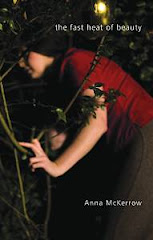
I was saddened to hear last week that Flambard Press, the publisher of my first book The Fast Heat of Beauty, have been a victin of Arts Council cuts and will lose all of their funding in 2012. Please support them by having a look at their publications and purchasing one or two! Recommendations: Peter Bennet's The Glass Swarm (a Poetry Book Society choice)and Kelley Swain's Darwin's Microscope.
Some good news came for me a few days ago when Alec Newman at Knives, Forks and Spoons press told me that among my recent sales of new book Spectral Emphatic were the University of Salford, who considered the book to contain "considerable literary merit". Ahem! Marvellous news - deeply humbled.
I've also just heard that a poem from Spectral Emphatic, Desert Sphinx, will be included in the next issue of Carole Baldock's Orbis Poetry Quarterly.
That's it for me right now - until next time...
Tuesday, 5 April 2011


Tuesday, 25 January 2011
Spectral Emphatic now available to order!
I can proudly announce that my new collection of poetry, Spectral Emphatic, is now available to order from the Knives, Forks and Spoons Press. At just £7 a complete bargain.
Here's a sneak preview of one of my favourite poems from the book, Elf-hill:
Elf-hill
I’m standing on a slip-road, waiting for the elves
on highway one. Mysteriously, the almost-bankrupt kroner
in my pocket is rolled into tight balls: I do not remember
that rounding reflex of my fingers; around us, the air slices
printing-ink and cod cheeks into a cold harmony. My pencil
hovers over the page. The bloody smell of the graphite makes
me nauseous. The Viking, a psychic and expert in these matters, is
squatting by an elf-hill around which the road parts.
This is his routine: consulting elves on plans for new roads
and intersections, settling the conundrums and drinking
coffee laced with something odourless but as warming
as the magic pounding my chakras from the
grass-covered mound. I chafe my hands, though gloved,
against the morning and yearn for an alcoholic or otherwise
effective preservative from the ghostly whims of the elf-folk,
baby thieves and hearth-cursers all, and the black moonscape,
steaming mud magic that I feel creep towards my swollen
belly, smoky fingers conjuring a jump under my
erratic diaphragm. The Viking coughs discreetly; he is ready to
dictate the elves’ terms, invoking shadows of boulders and
ice-floes and the splits in continental plates. Their demands
are simple enough: goats’ milk, bread and fresh seal meat.
My pencil moves across the page in the received
shorthand we use for such occasions, pressing sigils into the
page in the learnt language whose lines and spaces are the
windy plains in my own flat-vowelled fields of words. The
demands of the elves spread over the page like a virus:
observances to be kept with a ken of acceptance on both
sides. We will take this to be signed off, and the Viking is our
only parley, with his heavy fringe and hazel twigs.
I have never seen them, only felt their demands on my energy.
The Viking straightens from his crouch, brushing earth from his
knees, towering over the road like one who commands
lightning: it’s time to leave. As he turns, the sun hits the highway
like an alien visitation, and just for a moment the winter hillock
is alive with hands reaching for my pregnant belly, grasping
for a hold on the child-yet-to-be. I can feel their want like a
belt, squeezing spell-like promises from the foetus, promises
of the elemental to the water-bound. The Viking extends his
hand. “Don’t linger,” he says, and I pull myself away from the
lassitude that has already entered my blood like a sour painkiller,
a soused herring at the back of my tongue, dissolving.
Here's a sneak preview of one of my favourite poems from the book, Elf-hill:
Elf-hill
I’m standing on a slip-road, waiting for the elves
on highway one. Mysteriously, the almost-bankrupt kroner
in my pocket is rolled into tight balls: I do not remember
that rounding reflex of my fingers; around us, the air slices
printing-ink and cod cheeks into a cold harmony. My pencil
hovers over the page. The bloody smell of the graphite makes
me nauseous. The Viking, a psychic and expert in these matters, is
squatting by an elf-hill around which the road parts.
This is his routine: consulting elves on plans for new roads
and intersections, settling the conundrums and drinking
coffee laced with something odourless but as warming
as the magic pounding my chakras from the
grass-covered mound. I chafe my hands, though gloved,
against the morning and yearn for an alcoholic or otherwise
effective preservative from the ghostly whims of the elf-folk,
baby thieves and hearth-cursers all, and the black moonscape,
steaming mud magic that I feel creep towards my swollen
belly, smoky fingers conjuring a jump under my
erratic diaphragm. The Viking coughs discreetly; he is ready to
dictate the elves’ terms, invoking shadows of boulders and
ice-floes and the splits in continental plates. Their demands
are simple enough: goats’ milk, bread and fresh seal meat.
My pencil moves across the page in the received
shorthand we use for such occasions, pressing sigils into the
page in the learnt language whose lines and spaces are the
windy plains in my own flat-vowelled fields of words. The
demands of the elves spread over the page like a virus:
observances to be kept with a ken of acceptance on both
sides. We will take this to be signed off, and the Viking is our
only parley, with his heavy fringe and hazel twigs.
I have never seen them, only felt their demands on my energy.
The Viking straightens from his crouch, brushing earth from his
knees, towering over the road like one who commands
lightning: it’s time to leave. As he turns, the sun hits the highway
like an alien visitation, and just for a moment the winter hillock
is alive with hands reaching for my pregnant belly, grasping
for a hold on the child-yet-to-be. I can feel their want like a
belt, squeezing spell-like promises from the foetus, promises
of the elemental to the water-bound. The Viking extends his
hand. “Don’t linger,” he says, and I pull myself away from the
lassitude that has already entered my blood like a sour painkiller,
a soused herring at the back of my tongue, dissolving.
Friday, 7 January 2011
Spectral Emphatic

I am excited to announce that my third book of poetry, Spectral Emphatic, will be coming out in early 2011 with the Knives, Forks and Spoons Press. Just earlier this year they were kind enough to produce my book of durational experimental poetry, Taropoetics. Spectral Emphatic is a more conventional collection of poems, in that it is an overall collection of individual pieces written with no obvious method or procedure apart from the traditional inspiration, mulling, crossing-out and sudden imaginative leaps.
It has a theme, though, that threads through all of the poems in one way or another. The idea is that Spectral Emphatic is the sometime journal of an imagined poet and artist collective called The Bohemian Embassy: a small group stamping their obsessive, exhortative writings onto pulpy pages, making short runs of a cult publication. The book begins with their manifesto:
SPECTRAL EMPHATIC: JOURNAL OF THE BOHEMIAN EMBASSY
ITS MANIFESTO:
THE GROUP WILL STRETCH SPECTRAL FINGERS INTO THE WRITERS’ CONSCIOUSNESS AND POSSESS HER.
THE GROUP WILL MATERIALISE AS OCCASIONAL PHANTASMS.
THE GROUP SHALL SLIP IN AND OUT OF CONSCIOUSNESS.
MEMBERS OF THE GROUP SHALL TEETER AT THE EDGE OF THINGS.
WE WILL EMBRACE THE GHOSTLY AND LIMINAL.
THE GROUP SHALL BE LIKE EELS IN MURKY PONDS: SYMBOLS IN THE WRITER’S DREAMS.
INDIVIDUAL MEMBERS OF THE GROUP SHOULD BE AWARE OF THEMSELVES AS RESIDUAL FORMS CONTAINING UNSPENT PSYCHIC FORCE.
WE WILL INVESTIGATE THE WORLD WITH MAGIC PERSEVERENCE.
WE WILL ENCOURAGE THE WRITER TO EMBRACE THE SENTIMENTS OF HER GOTHIC AND SYMBOLIST FOREBEARS.
WE WILL DRIFT IN THE TIDEWINDS.
THE GROUP WILL RESPOND TO OTHER ARTISTS WHOSE WORK CONTAINS LIMINALITY AND THREAT, MENACE OR OTHERWORLDLINESS.
THE GROUP WILL APPLAUD WHEN THE WRITER DELVES INTO HER NIGHTMARES.
WE WILL ENCOURAGE CONSIDERATION OF ICONIC MYTHICAL FIGURES.
WE WILL TRANSMIT ON LOW FREQUENCIES.
The group features two main characters, Valerie and Veronik, that appear in some of the poems – they are ghostly, liminal, gothic, bohemian heroines that stand on the edge of things, transmitting symbols and dreams to those on low wavelengths.
The collection, then, is concerned with the ghostly and liminal; the gothic and symbolist. It also includes poems inspired by artists who might enjoy membership of the Bohemian Embassy: Christine Aerfeldt, Sarah Moon, Paula Rego, Nikki Sixx: artists who have explored the dark and mysterious places where the mind and spirit stray if unchecked. And those dark and mysterious recesses of the mind are where some of the other poems dally – grief, obsession and madness, unspent psychic forces, as well as addressing familiar mythic figures – the Sphinx, the Sirens, the goddess Medea.
Spectral Emphatic also returns to the theme of divination, but this time via bibliomancy, with 8: A Bibliomantic Poem. This is a long work in three parts made as a result of a processual approach to writing – in this case, a poem that investigates the essence of the energy of the number 8 by a writing-through of text from page 8 from every book on a three-shelf bookcase. The Bohemian Embassy also have a hand in this, using the writer’s trancelike state in writing through to transmit some of the mysteries they are concerned with.
The book cover is included above - illustration by the super talented Laura Daligan. Her website: http://www.lauradaligan-art.com/
Wednesday, 22 December 2010
Review of Taropoetics
I am delighted that Sarah Hymas has reviewed Taropoetics on her blog, Echo Soundings. Here's what she says:
I was drawn to Taropoetics by Anna McKerrow (Knives, Forks and Spoons Press, 2010) because of the description of "an ongoing pschyopoetic landscape". For a lover of dreams (and occasional tarot card reader) this idea appealed enormously. It'd be like reading the cards, drawing narratives and dreaming all in one.
I had come across Knives, Forks and Spoons Press earlier this year through Adrian Slatcher's Extracts from Levona. A strange, oddly compelling book. It's a small press that specialises in 'linguistically innovative poetry'. You could argue that all poetry should be liguistically innovative, but let's not.
What you wouldn't argue is how gymnastically innovative Anna McKerrow's landscape is. The Tarot works to cycles and so it's apt her book works to the cycle of a year - weekly readings form the basis of the text. She spent another year collating the weekly pieces to produce the poems in the book.
Not that the pieces feel constricted by rewrites, deadened and deanimated by cutting and tinkering. They pulse on the page. Each respond to five randomly chosen tarot cards, and each create a bauble of shadowy images, filched from streets, the natural world, the body, art, religion and mythology in a bubbling chemistry. Together they make a crazy make-believe laboratory, full of vapours and coloured liquids I was a little wary of at first.
It took me a while to adjust to this world, to learn its language to get over the culture shock of unfamiliarity. I'm a lover of narratives. And this book, a cross between Jane Graverol and Carrie Ann Baade, requires a double take, a step back, a step forward.
Then a slow sinking under, a relaxation of comprehension and an open mind brings a different consciouness, a change of light:
"heart sink/barb cruel/soft eye risk/shadow sword stack cut/glass words/cut like a cat/thick pane/even the strongest men/soft spooled/fur will rip/dire musicality..."
Sensuous, edgy and funny. The path these poems take is narrow and foggy, in the sense that I didn't really know where I was going at any given point in them. This makes for a destablised read, but also a vital one, my senses fully alert as to what may rear up.
Because of the Tarot element, there is also a sense of the imperative:
"...buried skull/space waits to be filled/jewel cries victory/through rubble/ignore naysayers/their mouths are stopped up w/rocks/exploded/rare sunset..."
- a commanding overview, the seer remaining hidden behind the images. Again this distance is unnerving, but it somehow it feels safe enough (once I've accepted the jamming and spacing of punctation that inhabits this lawless landscape). Safe, if I am safe, that is. Reading and rereading the unpredictable scape made me feel exposed to suggestion, imagery and connections I don't normally make within my own life experiences. Stumbling between play and dance, I get the feeling Anna wants us to open new pathways. It is one of the roles of the Tarot.
Anna has managed to balance between the spiritual and domestic, the unsettling and safe, so keeping me reading through her year. As a lover of narrative I did feel the absence of shape to the book, but this is not a collection interested in creating form, this is an expansive book, its form is bound by our Gregorian calendar, but even that isn't evident, there is no neat seasonal references as we pass through the year. The expansiveness is generous in its welcoming spirit, calling you to enter.
Go on ....
I was drawn to Taropoetics by Anna McKerrow (Knives, Forks and Spoons Press, 2010) because of the description of "an ongoing pschyopoetic landscape". For a lover of dreams (and occasional tarot card reader) this idea appealed enormously. It'd be like reading the cards, drawing narratives and dreaming all in one.
I had come across Knives, Forks and Spoons Press earlier this year through Adrian Slatcher's Extracts from Levona. A strange, oddly compelling book. It's a small press that specialises in 'linguistically innovative poetry'. You could argue that all poetry should be liguistically innovative, but let's not.
What you wouldn't argue is how gymnastically innovative Anna McKerrow's landscape is. The Tarot works to cycles and so it's apt her book works to the cycle of a year - weekly readings form the basis of the text. She spent another year collating the weekly pieces to produce the poems in the book.
Not that the pieces feel constricted by rewrites, deadened and deanimated by cutting and tinkering. They pulse on the page. Each respond to five randomly chosen tarot cards, and each create a bauble of shadowy images, filched from streets, the natural world, the body, art, religion and mythology in a bubbling chemistry. Together they make a crazy make-believe laboratory, full of vapours and coloured liquids I was a little wary of at first.
It took me a while to adjust to this world, to learn its language to get over the culture shock of unfamiliarity. I'm a lover of narratives. And this book, a cross between Jane Graverol and Carrie Ann Baade, requires a double take, a step back, a step forward.
Then a slow sinking under, a relaxation of comprehension and an open mind brings a different consciouness, a change of light:
"heart sink/barb cruel/soft eye risk/shadow sword stack cut/glass words/cut like a cat/thick pane/even the strongest men/soft spooled/fur will rip/dire musicality..."
Sensuous, edgy and funny. The path these poems take is narrow and foggy, in the sense that I didn't really know where I was going at any given point in them. This makes for a destablised read, but also a vital one, my senses fully alert as to what may rear up.
Because of the Tarot element, there is also a sense of the imperative:
"...buried skull/space waits to be filled/jewel cries victory/through rubble/ignore naysayers/their mouths are stopped up w/rocks/exploded/rare sunset..."
- a commanding overview, the seer remaining hidden behind the images. Again this distance is unnerving, but it somehow it feels safe enough (once I've accepted the jamming and spacing of punctation that inhabits this lawless landscape). Safe, if I am safe, that is. Reading and rereading the unpredictable scape made me feel exposed to suggestion, imagery and connections I don't normally make within my own life experiences. Stumbling between play and dance, I get the feeling Anna wants us to open new pathways. It is one of the roles of the Tarot.
Anna has managed to balance between the spiritual and domestic, the unsettling and safe, so keeping me reading through her year. As a lover of narrative I did feel the absence of shape to the book, but this is not a collection interested in creating form, this is an expansive book, its form is bound by our Gregorian calendar, but even that isn't evident, there is no neat seasonal references as we pass through the year. The expansiveness is generous in its welcoming spirit, calling you to enter.
Go on ....
Sunday, 19 December 2010
New Fairy Tales Issue 6
Rather belatedly, I admit, I need to tell you about the new issue of New Fairy Tales magazine – my second issue as Associate Editor for Poetry. The November issue was surprisingly easy to focus in terms of poetry – we were fortunate to have received a fantastic experimental fairy tale piece by Tim Mook Sang, a Canadian writer. You can check out Tim’s blog at http://eatingandeffing.tumblr.com. Here’s an excerpt from the poem:
velvet
i
she lives the maiden in her bedroom the top of a tower sleeps & eats there hears
rain outside and counts the drops her parents own her say she cannot leave and
she cannot leave her parents who love her she says combing her hair soft like
velvet blonde like moonlight that stays soft in towers out of weather
ii
she waits for me in her bedroom behind a shut door her father owns her says she
cannot leave and she cannot leave the burly father who needs her she says locked
in the room wrapped in blankets as soft as her skin but I slip under the door like
paper she is scared has never seen me before covers herself in blankets on her bed
iii
she stands in water buckets and pales water to her ankles her mother owns her
says she cannot leave and she cannot leave her mother who shows her the future
in vanity mirrors she says standing in buckets eels swimming infinity around her
ankles she boards up her bedroom window plywood over glass sheets from her
bed she wraps around her torso I am not allowed to enter this room and water
sways against her ankles
iv
she hears me outside her bedroom window boarded up inside she sees only
shadows on the ground I am throwing stones from a cairn to her window a bed of
lilies grows for her to sleep her parents say she does not listen but she hears the
stones clacking against her window
There are also a couple of great other poems by Ruby Ebrahim and David Morgan.
And here's a lovely video promo for the issue:
velvet
i
she lives the maiden in her bedroom the top of a tower sleeps & eats there hears
rain outside and counts the drops her parents own her say she cannot leave and
she cannot leave her parents who love her she says combing her hair soft like
velvet blonde like moonlight that stays soft in towers out of weather
ii
she waits for me in her bedroom behind a shut door her father owns her says she
cannot leave and she cannot leave the burly father who needs her she says locked
in the room wrapped in blankets as soft as her skin but I slip under the door like
paper she is scared has never seen me before covers herself in blankets on her bed
iii
she stands in water buckets and pales water to her ankles her mother owns her
says she cannot leave and she cannot leave her mother who shows her the future
in vanity mirrors she says standing in buckets eels swimming infinity around her
ankles she boards up her bedroom window plywood over glass sheets from her
bed she wraps around her torso I am not allowed to enter this room and water
sways against her ankles
iv
she hears me outside her bedroom window boarded up inside she sees only
shadows on the ground I am throwing stones from a cairn to her window a bed of
lilies grows for her to sleep her parents say she does not listen but she hears the
stones clacking against her window
There are also a couple of great other poems by Ruby Ebrahim and David Morgan.
And here's a lovely video promo for the issue:
Friday, 3 December 2010
Sarah Hymas' Host
I have been very quiet, haven’t I? But I have been very busy. Very busy indeed, yes. So to bring you up to date with what I’ve been doing, here’s something I’ve been reading: Sarah Hymas’ book of poems, Host. Now, immediately, the title makes me think about alien beings and diseases. Tapeworms, that kind of thing. Admittedly, I have a sci-fi imagination. I’m thinking about Sigourney Weaver playing scarily focused basketball right now. But the idea of a benign or perhaps unconscious structure being inhabited by another organism – and their relationship – is the focus of this multi-layered work. In Host, humans are the gentle or intrusive organisms swarming on the surface of the earth; but also not alien, not foreign: made of it.
The first part of the book, Bedrock, contains a narrative series of poems voiced by members of the Kibby family. Their relationship to their host, in this case the Yorkshire landscape, is explored sensitively by a writer whose appreciation of the nuances of energy in the natural and physical world is highly attuned:
A forget-me-not envelope scents the dark ward
Of a hospital, as honeysuckle stolen from Scarborough.
He writes in soft leaden whispers, long-limbed
Like the wind, sculpting in my mind. (Postmarked Today, 1927)
And
Driving alongside the Nidd, I saw myself
become two rivers, split to navigate the island
of my dead father: one sky-silvered quick,
the trained son; the other muddied with cross-currents.
His chest, rising with grass and rocks,
prevented me from seeing where the two might meet. (Nidderdale, 1934)
The family’s physicality has also absorbed the stone and wind of their environment:
Harold’s sweat speckled resin-bright on his forehead (Suffrage, 1910)
However, I have to say that my favourite part of the book is the second half of the second section, Landfall. Less narrative and not seemingly linked, these poems, for me, have the most intense relationship to nature and landscape. Inspired by extreme environments and preoccupied with air, rock, moss and water, these lovely meditations capture a sensual depth that is relatively unusual to find. And there is a real meditative, spiritual tone here too – holy men that, now and again, appear in the Himalayas, offer silent wisdoms, but it is really the silent ecstatic communion with the skies and the mountains that holds the greatest sense of revelation:
A musical score turned sculptural; filling
and falling through air, ventilating my vertebrae.
I breathe in octaves.
Out in minor chords.
With this dawn they magnify,
unfold like the wings of a griffin,
breasted with lotus petal chain-mail.
Trumpets echo up wicket-thin terraces.
Glaciers steal breath
faster than a knotted plastic bag.
The Himalya crevasse my ribcage,
let in light, scalpeled by this altitude,
as I was, yesterday on the walk here;
will be, tomorrow.
Packed salt in tired muscle,
they turn sharp then blunt in a distant wind.
Everything else, behind and below, melts away,
flesh from bone.
(From Pelling)
These poems do not just host or reside; they make a connection, a highway of energy between the physical, the limits of the body and the indefinable other. The thing I like most about this collection is the so-much-more-than landscape they offer: more, they are a being-in-ness, being-of-ness, that I very much enjoy.
Host is published by Waterloo Press. Sarah’s blog is http://sarahhymas.blogspot.com
The first part of the book, Bedrock, contains a narrative series of poems voiced by members of the Kibby family. Their relationship to their host, in this case the Yorkshire landscape, is explored sensitively by a writer whose appreciation of the nuances of energy in the natural and physical world is highly attuned:
A forget-me-not envelope scents the dark ward
Of a hospital, as honeysuckle stolen from Scarborough.
He writes in soft leaden whispers, long-limbed
Like the wind, sculpting in my mind. (Postmarked Today, 1927)
And
Driving alongside the Nidd, I saw myself
become two rivers, split to navigate the island
of my dead father: one sky-silvered quick,
the trained son; the other muddied with cross-currents.
His chest, rising with grass and rocks,
prevented me from seeing where the two might meet. (Nidderdale, 1934)
The family’s physicality has also absorbed the stone and wind of their environment:
Harold’s sweat speckled resin-bright on his forehead (Suffrage, 1910)
However, I have to say that my favourite part of the book is the second half of the second section, Landfall. Less narrative and not seemingly linked, these poems, for me, have the most intense relationship to nature and landscape. Inspired by extreme environments and preoccupied with air, rock, moss and water, these lovely meditations capture a sensual depth that is relatively unusual to find. And there is a real meditative, spiritual tone here too – holy men that, now and again, appear in the Himalayas, offer silent wisdoms, but it is really the silent ecstatic communion with the skies and the mountains that holds the greatest sense of revelation:
A musical score turned sculptural; filling
and falling through air, ventilating my vertebrae.
I breathe in octaves.
Out in minor chords.
With this dawn they magnify,
unfold like the wings of a griffin,
breasted with lotus petal chain-mail.
Trumpets echo up wicket-thin terraces.
Glaciers steal breath
faster than a knotted plastic bag.
The Himalya crevasse my ribcage,
let in light, scalpeled by this altitude,
as I was, yesterday on the walk here;
will be, tomorrow.
Packed salt in tired muscle,
they turn sharp then blunt in a distant wind.
Everything else, behind and below, melts away,
flesh from bone.
(From Pelling)
These poems do not just host or reside; they make a connection, a highway of energy between the physical, the limits of the body and the indefinable other. The thing I like most about this collection is the so-much-more-than landscape they offer: more, they are a being-in-ness, being-of-ness, that I very much enjoy.
Host is published by Waterloo Press. Sarah’s blog is http://sarahhymas.blogspot.com
Sunday, 25 July 2010
Review of Taropoetics

Hey y'all. I am pumped. Excited to tell you that my ex-tutor, digital poet John Sparrow has kindly reviewed my new book Taropoetics on his excellent Itchaway blog. However, for those if you too lazy to link to his site, I am very kindly reproducing the text here:
Before diving into the poem proper, it is worth drawing attention to the book’s introduction, which cites several poets as influential in the approach to writing these sequences. Though these form the basis of a more personally interpretive strategy, this is crucial to my understanding of the poems, being as I am a lover of procedural methods to produce unpredictable textual combinations. This is not to say that these poems cannot stand on their own merits, but that the poets McKerrow cites have very distinct methodological approaches which, for me, carry their own implications.
The poets mentioned — Hannah Weiner, John Cage, Jackson Mac Low — each employ conceptual or procedural frameworks for their texts. In the case of Weiner, the invasion of external stimuli — a case of the poet working with involuntary synaesthesia to produce a text. In the cases of Cage and Mac Low, the external is again vitally important as both a recognition of the influence of context in writing, but also as a tool for turning away from straightforward egocentric authority in the writing process. Both Mac Low and Cage have on occasion and to varying degrees allowed themselves to edit down the output produced by their procedures.
What McKerrow’s methodology shares with these processes is a welcoming of the external influences that are not merely influential but consequential — the use of outside systems that inform a new one. Using card combinations as stimuli for textual creation, and setting clear tasks across specific timeframes, the poems in Taropoetics come to form a whole sequence that simultaneously interacts with remapped systems and produce “fractured” narratives, whilst at the same time inviting the very linguistic frictions that allow for varied personal meaning-making. Like the card system that acts as a catalyst for her poems, McKerrow’s resultant texts are open to interpretation specifically in relation to the personal context in which they are uncovered. The systemic producing a radical personal.
If the methodology suggests the above assumptions, the texts themselves enact them. The poems are threaded with double meanings and the occasional subtle neologism. Whether planned or not, it becomes difficult not to see thematic relationships jumping across textual fragments. Perhaps the most successful moments for me are the completely shattering intrusions of mundane urgency that disrupt the momentum of imagery. For example, in poem 3, the majority of the language is disjointed in a way that encourages associative visual triggers. Phrases like “robotic feathers,” “sarcophagus glow,” “rage hopping,” “red knuckle bouquet,” — phrases that remind me of Maggie O’Sullivan’s short textual fragmentations — are suddenly undercut by the intrusion of the very real “dollar”. This is compounded by the following poem launching almost immediately into the everyday “regret cracked lino,” “regret” here being either the noun that cracked, or the verb, perhaps caught mid-sentence.
For me, these are the strongest moments of the work. Composed as they are through “techniques of automatic writing and trance,” the fragments — themselves broken up by the highly visible slash — become absorptive in their consistency of fragmentation, then at times suddenly take one of several turns in new directions and foreground once more the language in play. At other times, ambiguity of, for example, verb / noun creates complex and dense configurations that demand re-reading (“feet the callusy smell”). Articles, objects, are often sparsely contextualized within their fragments, encouraging an interpenetration across fragments, memories of fragments. Colours link dungeons to butterflies, chamber and hair. Language points to senses, whether through implied memory or an actual sense (smell, for example, seems to run throughout, explicitly and implicitly, with “coppery smell,” “smelt sweet,” “smell of caves,” even “clean sheets.”). Then suddenly, there is absolute clarity of voice and direction of object such that clarity itself seems absurd, unreal or simply brutal (“I’m doing this,” “all the work I do,” “fucking bitch.”).
I am again reminded of O’Sullivan in the way that these poems tread a delicate line between the intricate and fragile on the one hand and the brutal on the other. Sonically and thematically, condensed phrases are sometimes gentle on the ear, but just as likely to be cacophonous and jarring. As with the voice dichotomies, this is where the poems foreground their linguistic construction to me and open up the real joy of experiencing the text.
And Taropoetics is a joy to read. For me, this joy lies in the unpredictability but consistently forceful language throughout the book. Whether this is violently forceful or gently persuasive depends on which cards you are dealt.
http://itchaway.net/iablog/anna-mckerrows-taropoetics/
Subscribe to:
Posts (Atom)